
Your Guide to Emergency Storm Damage Restoration – Prevention, Recovery & Professional Repair
There were 12 named storms during the 2023–24 season, the highest recorded since storm naming began in 2015. As the risk to property and livelihood grows, this guide to Storm Damage Restoration provides essential advice on prevention, recovery and professional repair.
Storms can cause immense disruption and the aftermath often demands immediate action. Without proper preparation, properties can be vulnerable to wind, rain and flooding.
Swift action is also vital post-damage to prevent long-term structural issues.
As restoration specialists, our teams have supported countless property owners in returning their homes and businesses to pre-incident condition. This guide, developed by our in-house professionals, is designed to help you navigate the storm damage restoration process with confidence.
In This Guide
- What is a Storm?
- The Rise in UK Storms
- What is Storm Damage Restoration?
- Why Early Storm Damage Restoration Matters
- How to Prepare for a Storm
- Our Storm Damage Restoration Process
- Frequently Asked Questions
What is a Storm?
Whilst they lack a formal meteorological definition, a storm is widely recognised as an extreme weather event – driven by low pressure and often characterised by intense winds, heavy rain, snow, hail, thunder, lightning & the risk of flooding.
According to the Association of British Insurers, a storm is defined by:
Wind: Gusts of at least 48 knots (≥ 55 mph, Beaufort force ≥ 10)
Rainfall: At least 25mm per hour
Snow: 30cm within 24 hours
Hail: Intensity sufficient to damage hard surfaces
There are several types of storms, such as thunderstorms, tornadoes and typhoons, each occurring in different parts of the world based on regional climate conditions.

The Rise in UK Storms
Climate change has contributed to a rising trend in the frequency and severity of storms across the UK. Since the introduction of the UK’s storm-naming system in 2015, designed to improve public awareness and reporting, tracking these events has become more effective.
This system has also helped to visualise the growing impact of extreme weather in recent years.
We explore climate change’s role in this trend further in our blogs ‘Exploring the Rise in UK Storms’ and ‘A Global Crisis – The Human Causes of Flooding‘.
| Period | Number of Major Storms * | Named Storms |
|---|---|---|
| 2010-2014 | 10 | Naming not yet commenced. |
| 2015-2020 | 41 | 2015–16 (11): Abigail, Barney, Clodagh, Desmond, Eva, Frank, Gertrude, Henry, Imogen, Jake, Katie 2016–17 (5): Angus, Barbara, Conor, Doris, Ewan 2017–18 (10): Aileen, Ophelia, Brian, Caroline, Dylan, Eleanor, Fionn, David, Georgina, Hector 2018–19 (8): Ali, Bronagh, Callum, Deirdre, Erik, Freya, Gareth, Hannah 2019–20 (7): Atiyah, Brendan, Ciara, Dennis, Jorge, Ellen, Francis |
| 2021-2025 (to date) | 35 | 2020–21 (7): Alex, Barbara, Aiden, Bella, Christoph, Darcy, Evert 2021–22 (7): Arwen, Barra, Malik, Corrie, Dudley, Eunice, Franklin 2022–23 (4): Otto, Noa, Antoni, Betty 2023–24 (12): Agnes, Babet, Ciarán, Debi, Elin, Fergus, Gerrit, Henk, Isha, Jocelyn, Kathleen, Lilian 2024–25 (5): Ashley, Bert, Conall, Darragh, Éowyn |
*Data from Met Office UK Storm Centre Archive and Swinton Insurance.
What is Storm Damage Restoration?
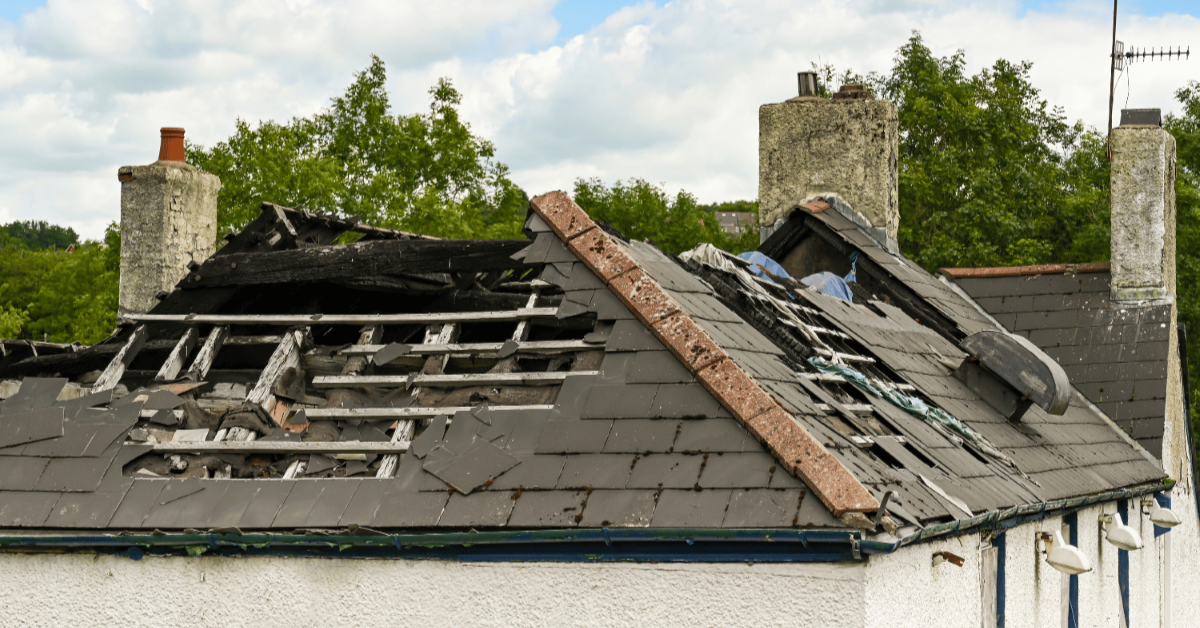
Storm damage restoration is a professional service carried out after a property has been affected by severe weather. It typically involves repairing structural issues such as damage to roofs, windows and walls, as well as addressing water ingress from flooding and leaks or damage caused by fallen trees and high winds.
Common storm damage restoration repairs include:
Structural & Roofing Repairs
- Flat Roof Repairs – Replacement of damaged flat roofing materials
- Pitched Roof Repairs – Including slate and tile replacement
- Ridge Tiles – Re-pointing or full replacement of loose or missing tiles
- Cemented Verge – Renewal of traditional cement verges
- Plastic Verge Systems – Replacement of damaged dry verge systems
- Chimney Repairs – Repointing, leadwork or full chimney rebuilds if required
- Gable End Wall Repairs – Stabilisation or rebuild of storm-compromised structures
- Garden & Boundary Walls – Rebuilding or stabilising collapsed masonry
Emergency & Preventative Repairs
- Temporary Repairs – Emergency make-safe works to prevent further damage
- Boarding Up Services – Secure windows and doors immediately after damage
- Debris Removal – Safe clearance of fallen trees, branches and structural debris
Water Damage & Moisture Control
- Water Extraction & Drying – Professional equipment to remove water and prevent mould
- Leak Detection – Trace & access for hidden water ingress issues
Exterior Fixtures
- Guttering & Downpipes – Realignment, clearing and replacement of broken sections
- Fascias & Soffits – Repair or replacement of wind-damaged cladding
Internal Restoration
- Internal Repairs – Plasterwork, ceilings, flooring and joinery affected by leaks
Our specialist teams are ready to respond swiftly, each equipped with comprehensive training to handle a wide range of restoration challenges. Our in-house technician training is externally validated and City & Guilds Assured, ensuring the highest standards of service and professionalism are delivered consistently across the country.
Why Early Storm Damage Restoration Matters
Delaying storm damage repair can lead to secondary damage, such as mould growth, structural degradation from water and costly insurance disputes. Early restoration prevents compounding these issues.
Acting quickly helps:
- Prevent further water ingress and mould
- Maintain structural integrity
- Streamline insurance claims with timely documentation
How to Prepare for a Storm
Before Severe Weather Hits
- Emergency Kit: Torch, batteries, first‑aid, bottled water
- Property Checks: Secure loose items, clear gutters, install flood barriers
- Inventory: Photograph valuables and maintain digital records
- Evacuation Plan: Identify safe routes and shelters
Immediately After a Storm
- Ensure Safety: Avoid downed power lines; check for gas leaks
- Shut Utilities: Turn off water, gas, electricity if safe
- Document Damage: Photos, videos & detailed notes in a home inventory
- Contact Insurer: Locate insurance documents and report damage within 24 hours
- Hire Dehumidifiers: Water ingress can cause secondary damage if not treated immediately
- Engage Professionals: Contact a reputable storm damage repair service
Read more:
Storm Warning in Effect – Prepare for Floods
Our Storm Damage Restoration Process
Phase 1: Technical Assessment & Hazard Mitigation
Our certified restoration specialists perform a structured on-site assessment to quantify damage severity, assess structural integrity and identify environmental hazards. Immediate mitigation measures are implemented to stabilise the site and prevent further degradation.
Phase 2: Digital Documentation & Insurance Liaison
We deploy sector-leading digital reporting platforms to capture high-resolution imagery, moisture mapping and detailed condition reports. This data-rich documentation is structured to streamline insurer communications and maximise claim success through transparent, audit-ready evidence.
Phase 3: Integrated Restoration Workflow
Using advanced water extraction systems, desiccant dehumidification units and remote drying sensors to gather real-time information, we initiate a controlled remediation programme.
Contents are inventoried, protected or restored using specialist techniques and structural repairs are executed to British Standard compliance, ensuring a resilient rebuild.
Phase 4: Environmental Decontamination & Handover
We complete a full-spectrum environmental clean, applying antimicrobial treatments and HEPA-grade filtration where required. Final air and surface testing ensure the environment is clinically safe, with a full handover report provided on completion.
Why Choose Rainbow Restoration?
We are the UK’s leading disaster restoration and specialist commercial cleaning company, trusted by insurers and homeowners nationwide. With over 40 years’ experience and City & Guilds Assured training, our 50+ branches provide 24/7 emergency response for any scale of storm damage.
Explore our testimonials and case studies for more.
If you’ve experienced significant storm damage, we’re here to help. With over 50 branches across the UK, there’s always a location within 23 miles of any postcode.
We offer comprehensive, end-to-end property restoration services – covering everything from water damage to high net worth contents restoration.

Get a Free Quote
Ready to protect your home?
Contact us today or call our 24-hour national helpline, available 365 days a year, on 01624 422 488.
Frequently Asked Questions
Q1: How long does storm damage restoration take?
The timeline varies based on the size of the property and the extent of the damage. We operate a 24-hour emergency line to ensure rapid response, assessment and remediation – helping return your property to normal as quickly as possible.
Q2: Will insurance cover storm repairs?
Most standard home insurance policies cover weather-related damage; however, it’s important to review your policy documents carefully to understand any exclusions and what may not be covered.
Q3: Can I dry my property myself?
In some cases, you may be able to dry the property yourself – we offer drying equipment hire, including industrial-grade dehumidifiers. However, for more severe water damage, it’s best to contact a professional, as the process can be complex.
Q4: How can I ensure my insurance claim is successful?
Report the damage to your insurer as early as possible and maintain thorough documentation, including photos and detailed notes. Clear records significantly improve the likelihood of receiving full coverage.
Read more: How to Prevent Your Flood Damage Claim From Being Rejected
Q5: How can I mitigate future storm damage?
Ensure regular maintenance of your property, keep gutters clear and consider investing in flood barriers and structural reinforcements.
Author: Adam Hewitt, Technical Manager | 18 years in Damage Management