
The Cost-Effective Way to Detect Leaks in a Commercial Rental Property
Winter is one of the most challenging times of year for commercial landlords. Cold snaps and ageing pipework can quickly lead to escape of water incidents – from small, easily-missed puddles to major bursts that trigger weeks of disruption, insurance claims and costly void periods.
Water rarely reveals itself at the point where the leak actually begins. Travelling naturally along the path of least resistance through downward gravitational pull, even across very slight gradients, the first visible signs of an escape of water can appear far from the original source.
In many commercial rental properties, especially areas that aren’t frequently occupied or monitored, this means a leak can go unnoticed for months. By the time damp patches, staining or puddling finally become visible, the water may have already travelled through walls, ceilings or service voids.
This can significantly increase your (or your tenant’s) water bills and leave a costly trail of damage behind.
The High Cost of Ignoring Leaks in a Commercial Building
Even a minor leak can escalate into structural damage, damp, mould growth and long-term repair bills if left unresolved. And once the leak is finally spotted, the next hurdle is identifying the exact source and fixing it fast, without causing unnecessary damage to the building or your tenants’ operations.
Traditionally, this process can be invasive: skirting boards are removed, plasterboard is cut into, and carpets, tiles or floorboards may need to be lifted. In many cases, this continues through multiple areas of the property until the exact point of failure is finally uncovered and repaired.
And that’s before you even factor in the reinstatement work – fixing, replacing and making good everything that was damaged during the search for the leak. By the time skirting, flooring and plasterwork are restored, the disruption, cost and downtime can feel disproportionate to the size of the original issue.
For commercial landlords, this can mean prolonged periods where the property can’t be used, revenue is paused and avoidable costs quickly add up.
At Rainbow Restoration UK, we use advanced leak detection technology to locate problems quickly and accurately. Our technicians draw on several specialised non-invasive techniques, selected based on the type of property, pipework and symptoms, to pinpoint hidden leaks without leaving a trail of destruction behind.
This approach reduces disruption for tenants, speeds up repair times and keeps reinstatement costs to a minimum.
3 Non-Invasive Ways to Detect a Leak in Your Commercial Rental Property
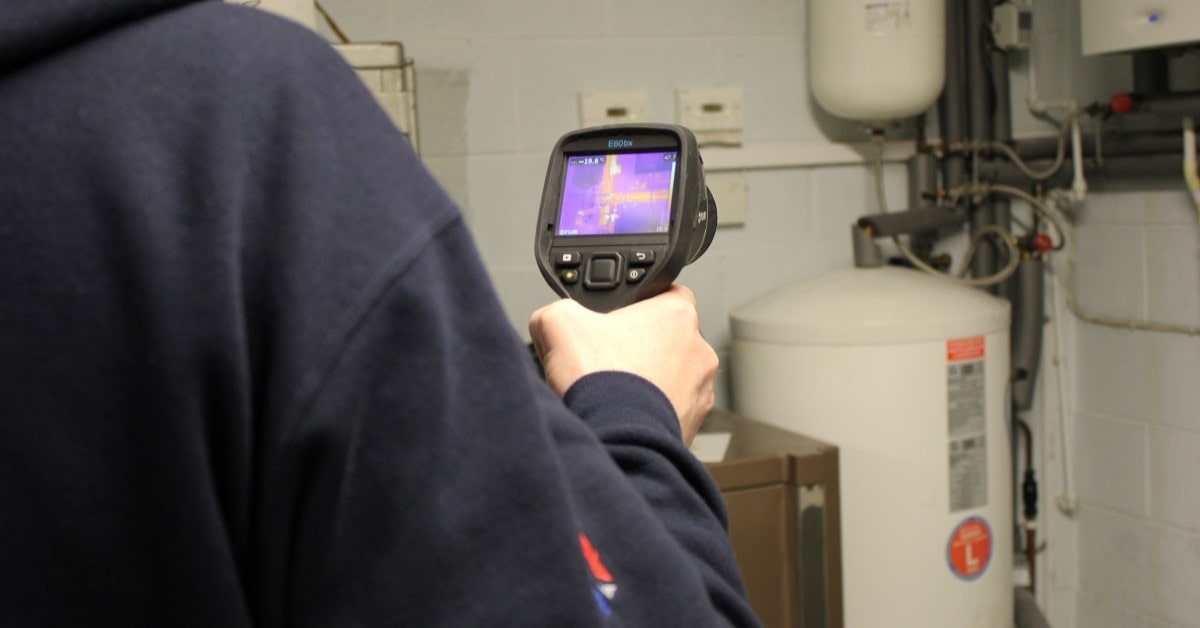
Thermal Imaging
Thermal imaging allows us to identify temperature anomalies within walls, floors and pipe runs without opening up the building. Escaping water is usually either warmer or cooler than the surrounding materials and these subtle temperature differences appear clearly on high-grade thermal imaging cameras.
Modern thermal imaging equipment is extremely sensitive, capable of detecting even minor variations that indicate hidden moisture or pipe failure. Because this method is completely non-invasive, we can usually pinpoint the leak with minimal, targeted excavation – reducing disruption and keeping repair costs lower.
Once the leak is repaired and the affected area is properly dried, your commercial property can typically return to full use quickly and safely.
Acoustic Testing
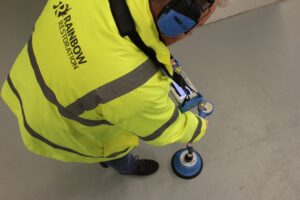
When thermal imaging isn’t suitable – for example, when pipework is buried too deeply or surrounded by materials that mask temperature change – we use specialist acoustic listening equipment. These highly sensitive devices detect the minute vibrations and sound frequencies created as water escapes from a compromised pipe.
By analysing these acoustic patterns, our technicians can trace the leak’s precise location without unnecessary damage, even in complex or hard-to-reach areas.
Tracer Gas
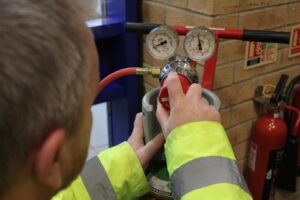
Tracer Gas testing is a more involved technique and is typically used when other non-invasive methods are unlikely to provide a conclusive result. In this process, the water is safely drained from the suspected pipe system and replaced with a specialist tracer gas blend – 95% nitrogen and 5% hydrogen.
Because hydrogen is the smallest and lightest molecule, it naturally escapes through even the tiniest fractures or weaknesses in the pipework. Our highly sensitive gas detection equipment then identifies where the gas is emerging, allowing us to pinpoint the precise location of the leak with exceptional accuracy.
This method is particularly valuable for complex, concealed or inaccessible systems where traditional approaches are less effective.
Our in-house expertise goes one step further with innovation in leak detection technology. Working closely with our partners at Synthotech, our resident leak specialist and Technical Manager, Lee Harrington, has helped refine specialist kits for the Olli Esders Tracer Gas Detection System. These improvements make the equipment more adaptable for a wider range of environments, enhancing accuracy and enabling more efficient on-site investigations across complex property types.
Frequently Asked Questions
- Does building insurance cover water leaks?
In most cases, yes – building insurance typically covers “escape of water,” which is the industry term for leaks caused by events such as burst pipes, failed appliances or damaged plumbing. However, it’s important to note that while the resulting damage is often covered, the cost of repairing the actual leak or faulty pipework may require additional cover or a specific add-on.
Because policies vary, always check the details of your own insurance documents to understand what is included, what exclusions apply and whether trace-and-access cover is in place.
- Are landlords liable for leaks?
In most situations, landlords are responsible for locating and repairing leaks in a rental property when the issue stems from structural defects, ageing pipework, general wear and tear or failures within the building’s plumbing system. However, if the leak is proven to have been caused by the tenant, for example, through misuse, negligence or accidental damage, the tenant may be required to cover some or all of the associated costs.
Because responsibilities can vary depending on tenancy agreements and the cause of the leak, it’s always advisable for both parties to review the contract and seek guidance from their insurer where needed.
- How do you locate a water leak?
Water leaks often reveal themselves through early warning signs such as damp or mould patches, persistent musty smells, a dripping or hissing noise or areas of unexplained moisture. An unusually high water bill or a sudden spike in usage is also a strong indicator that a hidden leak may be present.
For a detailed, step-by-step guide, including non-invasive methods used by professionals, read our full blog on how to find a water leak.
If you or your tenants suspect an escape of water and want to identify the cause with minimal disruption, our specialist leak detection teams can help. We’ll assess the situation, recommend the most suitable non-invasive method and locate the source of the leak with as little upheaval as possible.
With a national network of branches across the UK, expert support is always close by – ensuring fast response, accurate diagnosis and reduced downtime for your commercial property.
Contact us today or call our 24-hour national helpline, available 365 days a year, on 01624 422 488.
Updated: 28/11/25