
Lithium Battery Fires and The Dangers of Cheap Electronics
With the growing popularity of e-bikes, e-scooters and other low-cost electronics, the UK has seen a concerning rise in lithium battery fires. Backed by fire service data and safety insights, this article explores the risks associated with lithium-Ion batteries, the dangers of substandard electricals and practical steps you can take to reduce the risk of a house fire.
According to the London Fire Brigade, in 2023 there was, on average, one fire every two days in London involving a lithium-Ion battery in an e-bike or scooter. As these modes of transport and other electronic devices become cheaper, more popular and widely accessible, experts warn the number of incidents is unlikely to decrease.
The Welsh Fire and Rescue Service has identified lithium batteries as one of the fastest-growing fire risks. In 2023, West Yorkshire Fire & Rescue Service released real-life footage of a lithium battery fire igniting inside a home, highlighting the unrelenting nature and potentially devastating consequences of battery failure.
What are Lithium-Ion Batteries?
A lithium-Ion battery contains lithium, a highly reactive metal that stores and delivers electrical energy using positively charged lithium ions as the primary charge carriers. Known for their high energy density and long lifecycle, these batteries are widely used to power portable electronics, from smartphones to e-bikes.

Lithium-ion batteries are rechargeable and typically retain their capacity better over time compared to many other types of rechargeable batteries, such as nickel-cadmium or nickel-metal hydride. Unlike disposable (single-use) batteries, they can be recharged multiple times using a mains outlet or USB power source, making them highly practical for portable electronics and high-power devices such as smartphones, laptops, e-bikes, and power tools.
Originally developed in 1976 by M. Stanley Whittingham, Lithium-Ion batteries became widely commercially available in the 1990s and remain a cornerstone of modern energy storage. There are various types of lithium batteries designed for different applications, typically categorised by their shape into cylindrical, pouch or prismatic.
What is the Difference Between Lithium and Lithium-Ion Batteries?
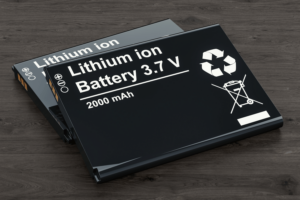
Lithium-Ion batteries are rechargeable, whilst traditional lithium batteries are designed for single use. The difference in rechargeability stems from their internal chemistry and structure.
What Products Contain Lithium-Ion Batteries?
Lithium-Ion batteries can be purchased individually but are more often embedded into a wide range of everyday products, making them a common feature in most modern UK homes. Devices such as laptops, smartphones, vapes, electric cars (EVs) and any other electronics that can be charged via a mains plug often contain Lithium-Ion batteries.
More recently, the rise of e-bikes and e-scooters has introduced higher-capacity batteries, which typically require significantly more voltage to charge and power the motor than a standard mobile device.

Power & Energy Comparison: E-Bike vs. Smartphone
To understand why the risk associated with a faulty e-bike is significantly greater than that of a faulty phone, it’s helpful to consider the differences in power requirements and energy consumption between the two.
As shown in the figures below, an e-bike’s battery capacity, power consumption and overall energy use are significantly greater than those of a standard smartphone. The combination of a larger battery, higher charging currents and greater energy density increases the likelihood of more severe consequences in the event of an electrical failure.
| Feature | E-Bike | Smartphone |
|---|---|---|
| Battery Capacity | 300–700 Wh (0.3–0.7 kWh) | ~10–15 Wh (0.01–0.015 kWh) |
| Full Charge Power Consumption | ~0.5 kWh per charge | ~0.015 kWh per charge |
| Annual Energy Use | ~60–90 kWh/year | ~5.5 kWh/year |
| Running/Usage Power | 250–500W whilst active | CPU uses 2–6W |
Sources:
Bosch eBike Systems: https://www.boschebike.com/uk/service/range-assistant/
EnergySage: https://www.energysage.com/electricvehicles/ebikes/how-much-electricity-does-an-ebike-use/
Battery University: https://batteryuniversity.com/article/bu-808-how-to-prolong-lithium-based-batteries/
iFixit & Tech Specs: Various listings stating ~10–15Wh https://www.ifixit.com/en-gb/
Why Are Lithium-Ion Batteries Dangerous?
Lithium-ion batteries pose a risk primarily due to their high energy density and rechargeable nature. Unlike standard single-use batteries, which are discarded once depleted, lithium-ion batteries draw significant power from an electrical outlet during charging.
This high-energy transfer, especially during charging, is when lithium batteries are most vulnerable to overheating, malfunction or failure – potentially leading to combustion through a process known as thermal runaway. Other risk factors include exposure to high temperatures or physical damage such as punctures or crushing can breach internal cell components, which can also compromise battery safety and lead to lithium battery fires.
When an electrical device fails and combusts, it can cause serious injury and often leads to significant house fires.
Electrical Regulations and Safety
Everyone appreciates a good bargain, but low-cost electronics can sometimes come at the expense of proper health and safety standards.
Not all lithium-ion batteries or electrical components are created equal. In the UK and EU, strict regulations require stringent safety testing and the inclusion of protective features, to reduce the risk of malfunction or fire.
UK regulations require the inclusion of safety mechanisms such as thermal cut-offs and overcharge protection circuits, which disconnect the battery if temperatures or voltages exceed safe thresholds.
Items ordered from outside the UK and Europe or dropshipped through online marketplaces, are often subject to different and typically less stringent, health, safety and product testing regulations.
The UK adheres to some of the most rigorous product safety regulations in the world, helping to ensure that approved items meet high health and safety standards. Many international bodies follow similar frameworks, with regulatory approaches in Western countries generally considered among the most stringent.
UK manufacturers follow strict standards, including BS 7671 (IET Wiring Regulations) for electrical installations and the Electrical Equipment (Safety) Regulations 2016 for product safety. The UKCA (UK Conformity Assessed) mark indicates that a product complies with all relevant UK safety regulations.
The UKCA (UK Conformity Assessed) mark is now required for most products sold in Great Britain and confirms compliance with UK product safety regulations. While the CE (Conformité Européenne) mark is still accepted in Northern Ireland and used across the EU, it has largely been replaced by UKCA in England, Scotland, and Wales.
Other important UK regulations include the General Product Safety Regulations 2005 and the Battery and Accumulator (Placing on the Market) Regulations 2008.
UL (Underwriters Laboratories) and ETL (Electrical Testing Laboratories) certification standards used primarily in North America are internationally recognised and align fairly closely with the core principles and safety requirements set by UKCA regulations.
Other notable international regulations include IEC Standards (International Electrotechnical Commission) and UN 38.3 – Transport of Lithium Batteries, which inform many of the national standards.
What Safety Precautions Can Be Taken to Prevent Lithium Battery Fires?
There are several practical steps you can take to reduce the risk of a lithium battery fire in your home or property.
- Ensure the product carries appropriate certification marks that confirm compliance with relevant health and safety regulations. As a reminder:
UK – UKCA
EU & Northern Ireland -CE

Sources:
UKCA: https://www.gov.uk/guidance/using-the-ukca-marking
CE: https://single-market-economy.ec.europa.eu/single-market/ce-marking_en - Only purchase from trusted retailers and always follow manufacturer guidelines when charging or replacing chargers.
Avoid unverified sellers on online marketplaces such as eBay or Amazon, where products may be counterfeit or dropshipped from regions with less stringent safety standards. This applies not only to devices themselves but also when replacing lost or damaged chargers and plugs. - Always follow the manufacturer’s guidelines for use and charging.
Proper use and charging according to the manufacturer’s instructions help maintain safety and battery health, reducing the risk of malfunction or fire. - It’s not recommended to leave devices charging unattended or overnight. Charging your phone on or near your bed whilst sleeping poses a serious risk if a battery fault or electrical issue occurs.
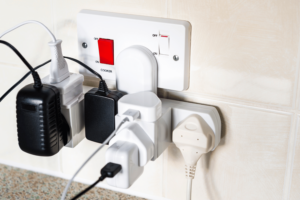
- Avoid overloading power outlets.
This is especially important when using extension leads or plugging in multiple high-powered appliances, as it can increase the risk of overheating and electrical fires.
- Consider Portable Appliance Testing (PAT Testing).
Whilst not a legal requirement, PAT testing is a valuable step for both homeowners and business owners to ensure electrical appliances are safe for use. The Health and Safety Executive (HSE) requires employers to maintain electrical equipment in a safe condition under the Electricity at Work Regulations 1989.
At Rainbow Restoration, we offer PAT testing services to help you meet safety standards and reduce risk. For more details, read our blog: ‘Portable Appliance Testing: Why You Should Get Your Electrical Appliances Tested’. - Batteries and electrical devices should be stored in a cool, dry place – away from direct sunlight and heat sources – to reduce the risk of overheating or damage.
- Batteries should always be disposed of responsibly. Many retailers, waste centres and private companies offer dedicated recycling schemes. You can use the Recycle Your Electricals tool to locate your nearest approved recycling point. Never dispose of batteries or electrical devices in general waste, as this poses safety risks and can be harmful to the environment.
What Does Lithium Battery Failure Look Like?
Signs of battery failure may include swelling or bulging, often caused by gas build-up from internal chemical reactions when the circuitry is compromised. Other indicators include leaking, overheating, unusual noises or unexpected power loss.
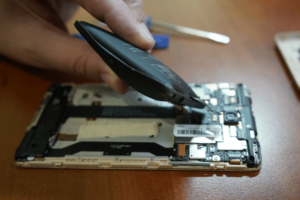
You may also notice the device charging unusually slowly, discharging rapidly or shutting down without warning.
If a battery is not performing as expected, shut down the device and replace the battery with a new, certified unit. If the battery appears deformed, is overheating or shows any signs of smoke or fire, unplug the device immediately (if safe to do so), move away from the area and contact the emergency services.
Other Helpful Resources
Electrical Safety First is a UK charity dedicated to promoting the safe use and design of electrical products, including as e-bikes and electric scooters. Their 2023 report, Battery Breakdown, explores the growing risks associated with lithium-ion battery fires in greater detail.
For further information, explore our dedicated blogs on the causes of electrical fires and the white goods most commonly linked to fire risks.
Our comprehensive resource, Be Fire Ready, is part of our wider fire safety campaign featured in the Property Hub, a dedicated platform offering up-to-date advice and practical safety tips for property owners.
In any situation, it’s vital to know how to respond if a fire occurs. Our detailed guide, How to Survive a House Fire, is designed to equip you with the knowledge and steps needed to stay safe in the event of an emergency.
Our guide on the classification of fires explains how to identify and manage different types of fires based on their fuel source, helping you choose the safest and most effective method to extinguish them.
If your property has been affected by a lithium-ion battery fire, Rainbow Restoration is here to help. Proudly serving the UK since 1987, our nationwide network of experienced restoration professionals is equipped with the expertise and resources to handle even the most complex recovery projects.
From smoke and fire damage restoration to odour removal, you can trust that your property will be treated with the utmost care and respect. If you need our support, don’t hesitate to contact us today or call our 24-hour helpline 365 days a year on 01624 422 488.